


Front doors
Secure front doors in the UK: how every door type compares

In short
On tested security alone, the five common types of front door sit in a clear order. uPVC, timber and composite doors can reach PAS 24, the baseline for a modern front door, and rarely go further. Aluminium security doors are rated on the RC scale, RC3 to RC4 on ours. Steel doors are tested to the LPS 1175 SR ratings, SR3 / SR4 on ours. Material is only half of it: the certified doorset and the fitting decide the rest.
Key takeaways
- Compare front doors on the rating they were tested to, not on the material or the word secure. PAS 24 is the baseline; LPS 1175 SR ratings and the RC classes go above it.
- uPVC, timber and composite doors can meet PAS 24 when sold as certified doorsets, but they are rarely tested beyond it.
- Aluminium suits glazed, modern entrances and is rated RC3 to RC4 on our doors. Steel reaches the LPS 1175 SR ratings, SR3 / SR4 on ours.
- The same door can perform very differently depending on the lock, the cylinder, the hinges, the glass and how well it is fitted.
The best front doors for security are not a brand or a material. They are complete doorsets tested to a recognised forced-entry standard, fitted properly into a sound opening. Compared on that basis, the five common types of front door sit in a clear order: uPVC, timber and composite at the PAS 24 baseline, aluminium security doors on the RC scale above it, and steel security doors at the LPS 1175 SR ratings.
Everyone asks which front door is the most secure, and it is the right question with an awkward answer: it depends what the door was tested to. This guide compares each type on the rating it can reach, then covers what matters beyond the material. Our front doors guide for London homes covers the four types we supply in more depth.
How should you compare front doors for security?
Compare the rating, not the material or the marketing. Two doors in the same material can perform very differently, and a door described as secure, strong or high security may have been tested to nothing at all.
Three standards do most of the work in the UK. PAS 24 is the pass-or-fail baseline for a modern front door, and what the building regulations for new homes in England point to. LPS 1175 grades a door from SR1 upwards by how long it resists attack and with which tools. The RC classes are the European resistance scale used for many aluminium doors. Each is explained on our certifications page, and the LPS 1175 SR ratings are set out level by level in our explainer.
How do uPVC, timber, composite, aluminium and steel doors compare?
| Door type | What it is | Security it can reach | Usually suits |
|---|---|---|---|
| uPVC | PVC frame and panel, steel reinforcement inside the frame | PAS 24 as a certified doorset; rarely tested beyond | A sound baseline at a lower cost |
| Timber | Solid or engineered timber leaf in a timber frame | PAS 24 as a certified doorset; most are not tested beyond | Period character where real timber matters |
| Composite | GRP skin over a foam or timber core, steel plate at the lock | PAS 24; not generally tested to LPS 1175 | A mid-market replacement for a timber door |
| Aluminium | Thermally broken aluminium frame, security-rated core | RC classes; RC3 to RC4 on our doors | Modern, glazed entrances with slim frames |
| Steel | Galvanised steel frame, reinforced security-rated core | LPS 1175 SR ratings; SR3 / SR4 on our doors | Period, panelled and higher-risk entrances |
The table describes what each type can reach when it is sold and certified as a tested doorset. A door of any type that has not been tested sits below the baseline, whatever it is made of.
Are uPVC and timber front doors secure enough?
They can be, at the baseline. A good uPVC door has steel reinforcement inside the frame, multi-point locking and an anti-snap cylinder, and when it is certified as a doorset it can meet PAS 24. Timber doors can meet PAS 24 too, though their performance depends heavily on how the leaf and frame are made.
Where they stop is above the baseline. Few uPVC or timber doors are tested to the LPS 1175 SR ratings, so for a home that needs more than PAS 24 they are not usually the answer.
Where do composite doors fit?
Composite doors sit at the same baseline. They layer a GRP skin over a foam or timber core and rely on a steel plate at the lock zone, which is enough to reach PAS 24 but not the higher, longer-attack ratings. Our comparison of composite and steel security ratings goes through the difference in detail. A composite door is a reasonable replacement for an old timber door; it is not a security door in the tested sense.
Aluminium or steel: which goes further?
Both go beyond the baseline, in different directions.

Aluminium front doors are rated on the RC scale, RC3 to RC4 on our doors. The thermally broken frame is slim, so more of the entrance can be glass, which makes aluminium the usual choice for a modern house or a glazed surround.
Steel security front doors are built and tested to SR3 / SR4 under LPS 1175, the ratings that measure resistance to a determined attack with a range of tools. Steel also takes panelled and period detail well, which is why it is the usual choice for a Victorian or Edwardian frontage and for higher-risk homes.
On tested rating alone, steel reaches the higher levels. Whether it is the right door for your house depends on the property, how much glass you want and the level of risk, and a lower rating is often all a home needs.
What matters beyond the material?
The material sets the ceiling. The parts of the door decide whether it reaches it.
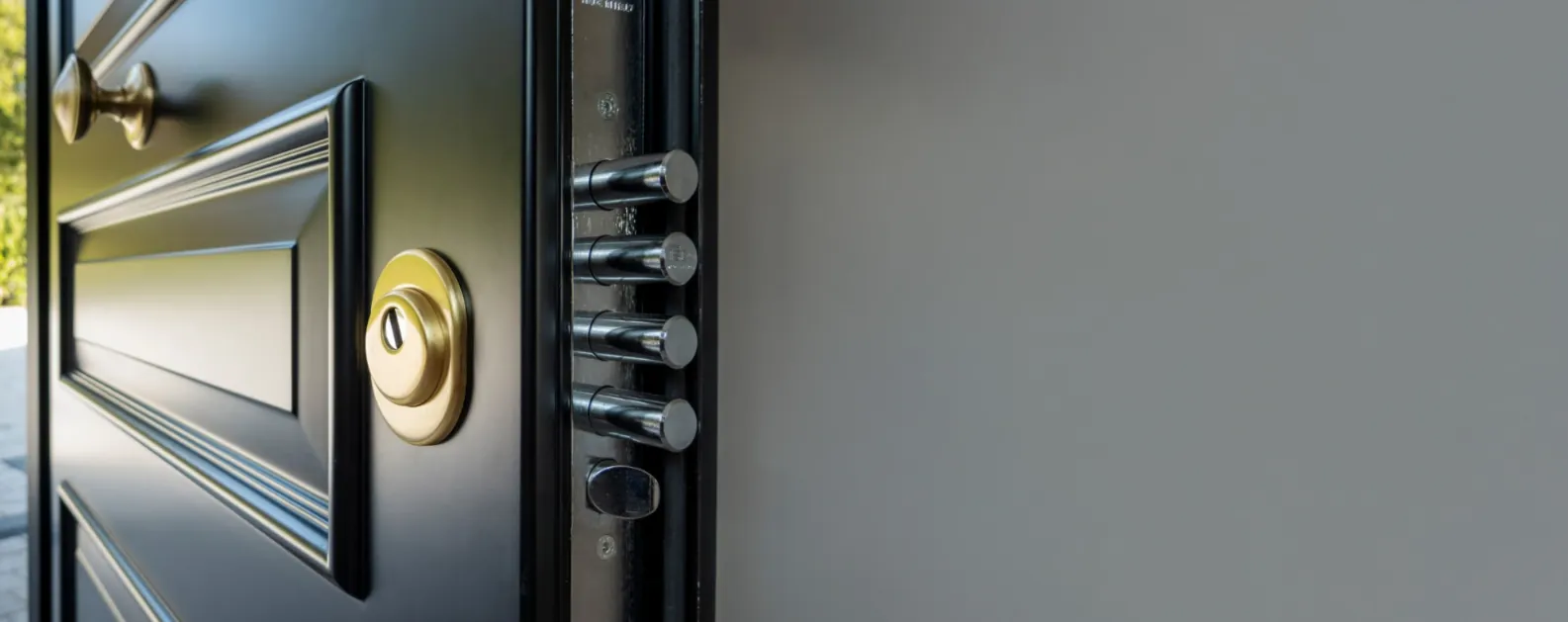
- The locking. Multi-point locking engages the frame at several points at once, so there is no single point to force.
- The cylinder. An anti-drill, anti-pick cylinder stops the lock being turned from outside once the cylinder is attacked.
- The hinges. Concealed hinges with hinge-side bolts hold the door in the frame on that side.
- The glass. Laminated security glass, tested as part of the doorset, stays in place when struck.
- The fitting. A tested door fixed loosely into a weak opening will not perform the way it did under test.
Our guide to burglar proof front doors looks at the same parts from the other side: the routes burglars actually use to get through a front door.
Which secure front door is right for your home?
Start with the risk, then the house. Most homes are well served by a door tested above the baseline; a few need the higher ratings. We survey the opening, talk through the level of security your home actually needs and the look you want, and give you a written, itemised quote before anything is made. Book a free site survey and we will advise honestly, including when a lower rating is enough.
Frequently asked questions
- What are the best front doors for security in the UK?
- The front doors with the strongest security are complete doorsets tested to a recognised standard above the PAS 24 baseline, such as an LPS 1175 SR rating for steel or an RC class for aluminium. Material matters, but the certificate, the locking and the fitting matter as much.
- What is the most secure front door for a house?
- On tested rating, a steel security door tested to LPS 1175 reaches higher levels than uPVC, timber or composite. Whether it is the right door for your house depends on the risk, the style of the property and how much glass you want, which is what a survey is for.
- Is aluminium or steel more secure for a front door?
- Both can be security-rated. Steel is tested to the LPS 1175 SR ratings and suits panelled, period and higher-risk entrances. Aluminium is rated on the RC scale and suits modern, glazed entrances with slim frames. Our steel doors are built and tested to SR3 / SR4 and our aluminium doors to RC3 to RC4.
- Are uPVC front doors secure?
- A good uPVC door with a steel-reinforced frame, multi-point locking and an anti-snap cylinder can meet PAS 24, which is a sound baseline. uPVC doors are rarely tested beyond that, so for a higher-risk home a steel or aluminium security door goes further.
- Does a secure front door have to look like a security door?
- No. The security sits in the frame, the core and the locking, so the face of the door can be panelled, glazed, timber-effect or painted in any colour. A tested doorset keeps its rating whatever finish it is made in.

