


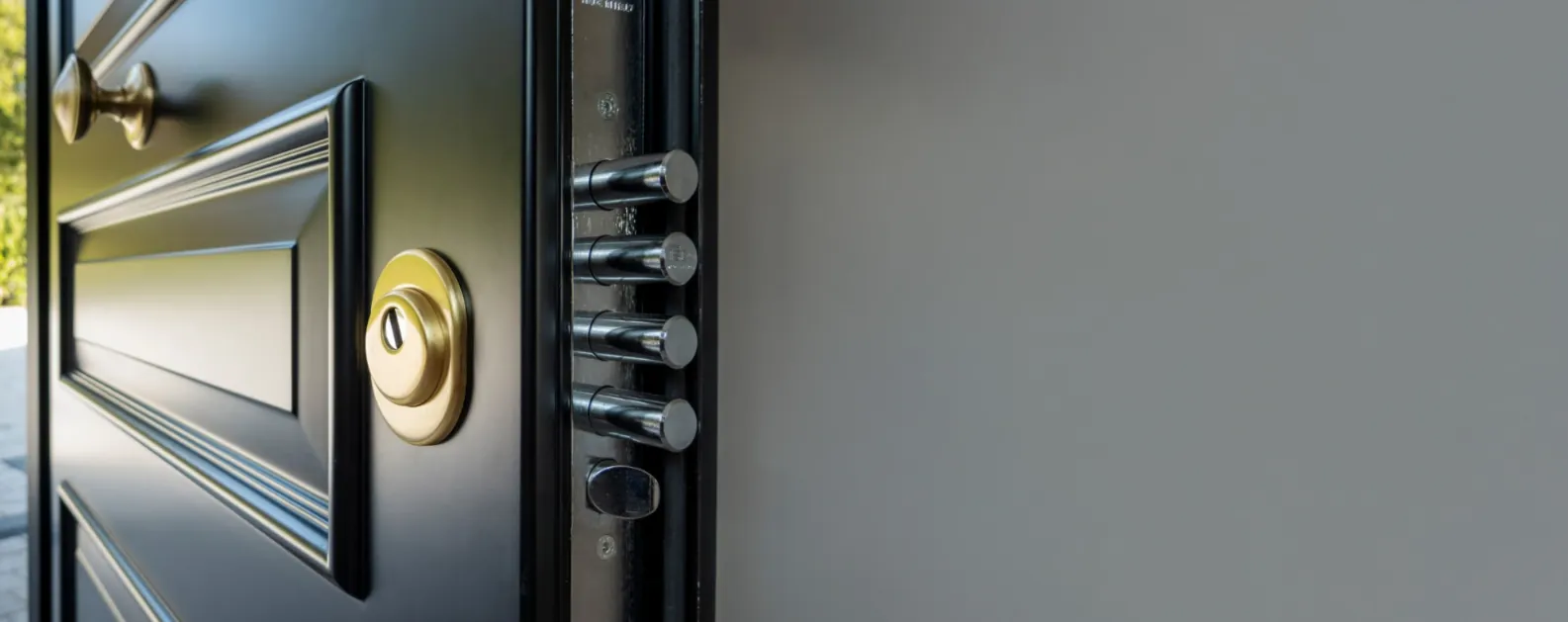

Front doors
Front doors. Four materials, one standard of security.
Steel, aluminium, pivot or custom: every front door we supply is built on security-rated construction, measured at your home and fitted by our own team. The look is yours. The security is non-negotiable.
Engineered to resist. Designed to be seen.
A front door is the first thing a visitor notices and the first thing an intruder tests. We think it should do both jobs well: look exactly right for your home, and resist what it needs to resist.
Our four door types cover the full range of front-door intent: the traditional strength of steel security front doors, the slim sightlines of aluminium front doors, the architectural scale of pivot front doors, and bespoke front doors made to measure for homes that need something drawn from scratch. The security-rated construction and the installation are constant across all four. The design is where you choose.
We have been working in the security trade for more than 40 years. Every door we supply is surveyed, measured and fitted by our own team, which means one point of contact from the first call to the handover. No separate contractors, no coordination headaches, nothing handed off and lost.
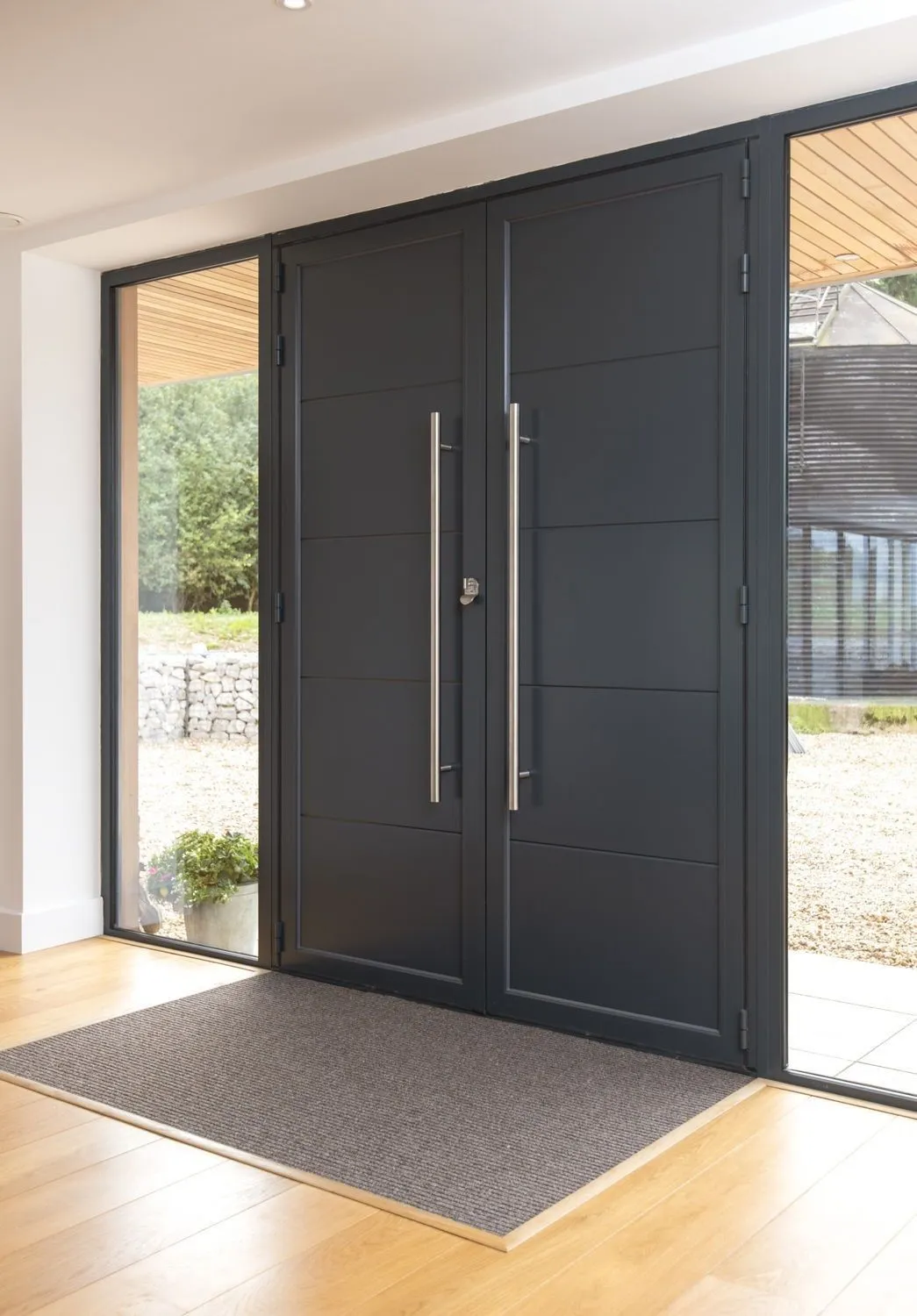
The range
Choose your material.

Steel front doors
The benchmark for security. A galvanised steel frame around a security-rated core, dressed in period mouldings or a clean modern face, finished in any RAL colour. Built and tested to SR3 and SR4, designed to withstand a determined, tooled attack.
Built and tested to SR3 / SR4 · Galvanised steel core · Any RAL colour
See our steel front doors →
Aluminium front doors
Slimmer frames, more glass, a crisp modern look. Thermally broken aluminium construction with security-rated performance underneath. The natural choice for a light, contemporary entrance with large glazed panels and sidelights.
RC3 to RC4 · Thermally broken · Any RAL colour
See our aluminium front doors →
Pivot doors
Architectural scale on a balanced pivot. Built far larger than a standard door, in steel or aluminium, with security-rated construction underneath the statement. When the entrance needs to make an impression, this is how it is done.
Security-rated construction · Balanced pivot · Steel or aluminium
See our pivot front doors →
Custom front doors
When nothing off the shelf fits. Made to measure front doors designed around your home, drawn to your specification, in any style, material and finish. Period properties, unusual openings, your own design: we quote from a blank sheet.
Fully bespoke · Made to measure · Security-rated construction
See our custom front doors →How do you choose the right front door for your home?
The four materials overlap more than they differ. All four are security-rated, all four are made to measure, and all four are fitted by the same team. What separates them is the house, how much glass you want, the size of the opening and where your security priority sits. Our guide to choosing between steel and aluminium for a London home works through those questions case by case, and our comparison of how every type of front door compares on security sets uPVC, timber and composite alongside them. The short version is below.
Steel: when security leads
Steel security front doors are the choice when the door has to resist the most. A galvanised steel frame around a security-rated core is built and tested to SR3 / SR4, the LPS 1175 levels designed to hold out against a determined, tooled attack. Steel also takes period detail well: raised and recessed panels, mouldings and knockers sit naturally on a Victorian or Edwardian house. If you are comparing it with a composite door, our side-by-side of composite and steel security ratings shows where each one stops. For the full buying picture, read our buyer's guide to steel front doors.
Aluminium: when the entrance is mostly glass
Aluminium front doors suit modern houses and entrances with sidelights or large glazed panels. The frames are slimmer, so more of the opening is glass, and the thermally broken construction keeps the warmth in. Our aluminium doors are rated RC3 to RC4. Finishes run from flat anthracite to timber-effect and marble-effect faces, in any RAL colour.
Pivot: when the opening is oversized
Pivot front doors turn on a pivot set into the head and the floor rather than hanging on side hinges. That lets the door be far wider and taller than a hinged door, and it gives an entrance real presence. Pivots need the right floor and structure beneath them, and they are not the answer for every opening. Our guide to what a pivot front door is and when it is the wrong choice covers both sides.
Custom: when nothing standard fits
Bespoke front doors, made to measure, start from a blank sheet: an unusual opening, a listed or period frontage, a design you have drawn yourself. We choose the material, the panel design, the glazing and the hardware around the house, and the door is still built on security-rated construction. If you are weighing looks against protection, our guide to choosing a secure front door without compromising on design sets out what to ask for.
What does security-rated actually mean?
"Strong" is a word anyone can use. A security rating is a test result. In the UK, front doors are judged against a small number of standards, and it is worth knowing what each one is before you compare quotes. Our guide to burglar proof front doors and what actually keeps a burglar out starts from the attacks a door has to resist.
- LPS 1175 is the Loss Prevention Certification Board's forced-entry standard. It grades a door from SR1 upwards by how long it resists attack and with which tools. Our steel doors are built and tested to SR3 / SR4. Our explainer on what the LPS 1175 SR ratings mean shows how the levels step up.
- PAS 24 is the British Standards Institution's pass-or-fail test for enhanced security doorsets. It is what the building regulations for new homes in England point to, and the baseline many home insurers recognise.
- Secured by Design is a police-run scheme, not a test in its own right. A product qualifies by meeting the recognised standards and holding third-party certification. Our guide to what makes a door Secured by Design explains how to check a claim before you order.
Insurers work from these standards rather than a list of approved brands, which is why our guide to whether insurers approve specific front doors is about certificates, not names. The rating is only part of it: the lock does a great deal of the work, and our page on multipoint locking and front door security covers what engages where. The full set of standards, with what each covers, is on our certifications page.
We match the rating to the risk at the survey. Most homes do not need the highest level, and we will not recommend more than yours does.
Will a security door keep the house warm?
A heavy door is not automatically a warm one. What keeps the heat in is the core, the seals and the frame. Our steel doors reach a U-value of 0.8 W/m²K or better, and our aluminium doors reach up to 0.8 W/m²K, with a thermal break in the frame so the cold outside face does not chill the inside. Our page on insulated front doors and U-values explains what the figure means and how it compares with a typical older door.
A security front door also asks very little of you once it is in. The finish wants a wipe-down, the hinges and locking points want an occasional check, and the seals want looking at as the seasons turn. Our guide to looking after a steel front door lists what to check, what to leave alone, and when to call us.
What does a new front door cost?
There is no price list, because no two openings are the same. The cost comes down to the material, the size of the opening, the glazing and sidelights, whether the door pivots, the security rating and the finish. A standard single steel door costs less than an oversized pivot in a bespoke design.
Our guide to what a new front door costs in London breaks down each of those drivers. There are separate guides for the cost of an aluminium front door and the cost of a bespoke front door. You get a written, itemised quote after the free survey, agreed before anything is made.
What a door adds to the value of a house is harder to pin down, and anyone quoting a percentage is guessing. What it does change is what an insurer, a surveyor and a buyer see when they look at the front of the house. Our guide to whether security doors increase property value covers when the investment pays back and when it does not.
One team from survey to handover.
Every door starts with a free site survey. We come to your home, measure the opening, talk through what you want, and advise on the material and the security standard the door should be built and tested to for your situation. The quote is written and agreed before anything is made.
- Survey. We measure the opening, check the floor and the structure around it, and talk through the look, the glazing and the security level.
- Design. You get drawings and a written, itemised quote, with the finish, hardware and locking confirmed.
- Made to order. The door is made to your measurements. Most doors take four to six weeks from survey to fitting.
- Fitting. Our own team takes the old door out, fits the new one, makes good the opening and takes the old door away.
Security Doors 'R' Us is part of a family business with 4.9 stars and more than 170 Google reviews across our wider security work. We bring the same approach to every front door job.


Good to know
Front doors, asked and answered.
What types of front door do you supply?
We supply four types of front door: steel, aluminium, pivot and custom made to measure. Steel gives the highest security rating; aluminium gives slimmer frames and more glass; pivot doors bring architectural scale; and custom covers any design, size or opening that the other three do not reach. All four are built on security-rated construction and fitted by our own team.
What affects the cost of a front door?
A front door is a considered purchase, and the cost depends on a handful of things: the material, the size of the opening, the configuration (glazing, sidelights, a pivot action), the security rating you need, and the finish. A standard single steel door costs less than an oversized pivot in a bespoke design, for example. We do not publish prices, because every door is quoted on the detail rather than picked off a list. You get a written, itemised quote after a free survey, agreed before any work begins.
What does security-rated mean for a front door?
A security-rated front door is one that has been independently tested to resist a forced-entry attack. The rating systems used in the UK include LPS 1175 SR ratings (SR2, SR3, SR4 and above) and PAS 24, a standard tested to European EN 1627 methodology. An SR3-rated door is built to withstand a determined, tooled attack; higher ratings are available for higher-risk properties. We match the rating to your actual risk at the free survey, and we do not recommend more than you need.
Do you cover my area?
We survey and install across London and the Home Counties. If you are in north London, north-west London or the surrounding area and want to discuss a front door, get in touch and we will confirm coverage for your postcode.
How long does a front door take from survey to installation?
Most doors take four to six weeks from survey to installation, because every door is made to order rather than taken off a shelf. Fully custom designs may take a little longer. We confirm the exact timeline in writing at the survey stage, so you have the date up front.
What is the difference between PAS 24 and Secured by Design?
PAS 24 is a test standard: a door is attacked in a laboratory and passes or fails. Secured by Design is a police-run scheme that a product joins by meeting recognised standards, PAS 24 among them, and holding third-party certification. So a door can be tested to PAS 24 without being Secured by Design, but a Secured by Design door will have met a standard like PAS 24. When you compare doors, ask for the certificate behind either claim.
Ready to find the right front door?
Get a quote or book a free site survey. We will come to you, measure up and advise honestly on what suits your home.